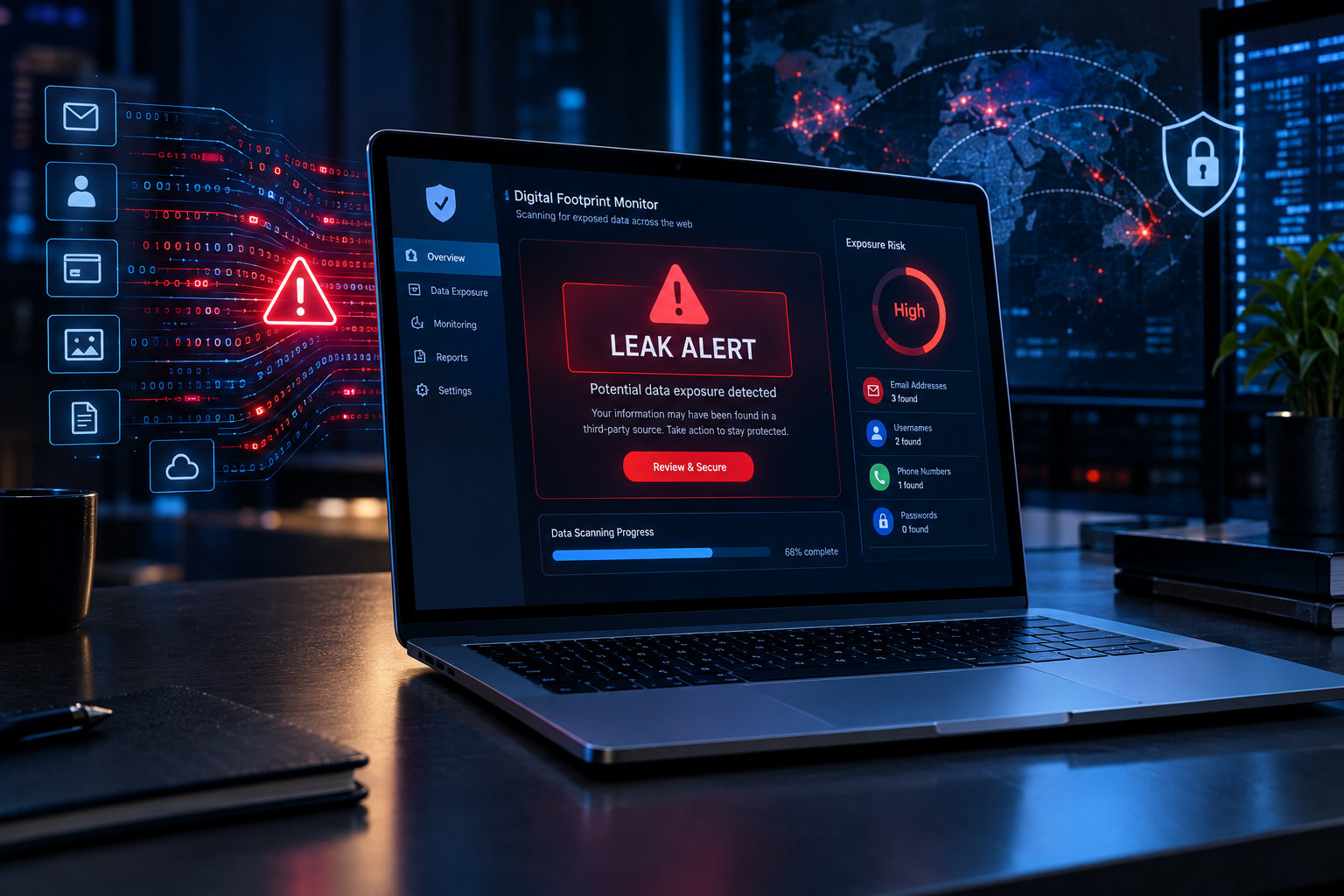
The phrase thejavasea.me leaks aio-tlp370 has attracted attention because it appears to describe a leak-related package or identifier circulating online. The problem is that publicly available reporting does not establish a verified victim organization, exact dataset, record count, or confirmed contents. Several websites repeat claims about the term, but repetition is not the same as independent verification.
For readers searching for thejavasea.me leaks aio-tlp370, the most useful question is not how to obtain the material. It is what the label actually means, how much of the reporting can be trusted, and what steps can reduce the risks associated with unknown leaked files.
What Does thejavasea.me leaks aio-tlp370 Mean?
The phrase combines a website name with the terms “leaks” and “AIO-TLP370.” Current public coverage generally treats AIO-TLP370 as an online identifier associated with alleged leaked or redistributed digital material. However, the available evidence does not establish a single authoritative definition for the package.
“AIO” commonly means “all-in-one” in technology terminology. It can describe a collection that combines multiple resources, although that interpretation has not been officially confirmed for this particular identifier.
The “TLP” portion can also be misleading. Traffic Light Protocol is a genuine cybersecurity information-sharing standard maintained by FIRST. Its current version recognizes TLP, TLP, TLP and TLP. AIO-TLP370 is not one of those official TLP designations.
The number “370” may function as an internal package, post or release identifier, but there is no authoritative documentation establishing exactly what it represents.
| Claim or interpretation | Current assessment |
|---|---|
| AIO-TLP370 is discussed online | Supported by secondary reporting |
| “AIO” may mean “all-in-one” | Plausible, but not officially confirmed |
| TLP370 is an official TLP label | Incorrect |
| Exact contents are publicly verified | Not established |
| A specific company has confirmed a breach under this name | Not established |
| Exact number of affected records is known | Not established |
Is AIO-TLP370 a Confirmed Data Breach?
This is where caution is especially important. A search result, forum post or article describing a “leak” does not by itself establish that a confirmed cybersecurity incident occurred.
A properly documented breach generally has an identifiable affected organization, information about the incident, evidence or investigation supporting the claim, and often notifications or statements from responsible parties. Current reporting around thejavasea.me leaks aio-tlp370 does not provide enough authoritative evidence to establish those details.
That does not prove every claim surrounding the identifier is false. It means the available public evidence should be treated according to its level of verification.
Readers should also avoid confusing the phrase with the legitimate Traffic Light Protocol. FIRST explains that TLP exists to communicate how sensitive information can be shared. Under TLP 2.0, only the standardized labels are considered valid.
Why Searching for Leak Packages Can Be Risky
Someone searching for thejavasea.me leaks aio-tlp370 may encounter pages claiming to provide downloads, mirrors, archives or additional information. Interacting with unknown files introduces risks that have little to do with whether the original leak claim is genuine.
Unknown archives can contain malicious executables, scripts, credential-stealing software or deceptive links. CISA has documented attacks in which malicious links and attachments were used to deliver malware and steal sensitive information.
There is also a privacy issue. Allegedly leaked material may contain personal information belonging to people who never consented to its distribution. Downloading, storing or redistributing such material can create additional security, privacy or legal concerns depending on the circumstances and jurisdiction.
💡 Pro Tip: If your concern is whether your own information appears in a suspected leak, do not download the alleged archive to investigate it. Check your accounts directly, use reputable breach-notification services where appropriate, and change exposed credentials through the legitimate service that issued them.
What Should You Do If You Are Concerned?
If you searched for thejavasea.me leaks aio-tlp370 because you think your information may have been exposed, focus on your own accounts rather than the alleged package.
Start by identifying accounts that may have reused an old password. Change those passwords through their official websites and make every password unique. Enable multi-factor authentication wherever it is available.
Pay particular attention to email accounts because they can be used to reset passwords for other services. Review recent login activity and account-recovery settings, and remove unfamiliar devices or sessions.
If you receive an unexpected message claiming to contain evidence of the alleged leak, avoid clicking its links or opening attachments. Verify the situation independently using the official website or support channel of the relevant organization.
What the TLP Reference Actually Means
Understanding the legitimate TLP standard makes the AIO-TLP370 terminology easier to evaluate.
FIRST’s TLP 2.0 standard is designed around information-sharing boundaries. TLP is restricted to recipients, TLP has limited disclosure, TLP permits sharing within a defined community, and TLP can be shared publicly.
There is therefore no basis for treating “TLP370” as an official cybersecurity classification. The similarity in wording appears to be one reason the label can look more authoritative than it actually is.
📌 Key Takeaway: thejavasea.me leaks aio-tlp370 should currently be treated as an unverified leak-related identifier rather than a confirmed breach with known contents and victims. The safest response is to avoid unknown downloads, verify claims through authoritative sources, secure important accounts and never redistribute potentially stolen information.
Frequently Asked Questions
What is thejavasea.me leaks aio-tlp370?
It is a search phrase associated with an alleged leak-related package or identifier connected in online reporting with TheJavaSea.me. Its exact contents and origin have not been reliably established by authoritative public sources.
Is AIO-TLP370 an official cybersecurity term?
No. FIRST’s official Traffic Light Protocol uses TLP, TLP, TLP and TLP in its current TLP 2.0 standard. AIO-TLP370 is not an official TLP designation.
Has AIO-TLP370 been confirmed as a major data breach?
There is not enough authoritative public evidence to describe it as a confirmed major breach with a verified victim organization, record count and authenticated dataset. Claims should therefore be treated cautiously.
Should I download an alleged AIO-TLP370 archive?
No. Unknown leak archives can expose users to malware, phishing, stolen credentials and privacy risks. There is no need to download questionable files to protect your own accounts.
What should I do if I think my information was exposed?
Change reused passwords through the legitimate services involved, enable multi-factor authentication, review account activity and be particularly cautious about unexpected emails or messages. Avoid responding to suspicious links claiming to provide proof of a leak.
Conclusion
Interest in thejavasea.me leaks aio-tlp370 appears to be driven by an online leak-related identifier whose meaning and contents remain insufficiently verified. The most responsible approach is to distinguish documented cybersecurity information from repeated online claims. Rather than attempting to access unknown material, users should concentrate on account security, suspicious-message awareness and verification through trustworthy sources.